“True resilience begins when we rise from our lowest points and choose to transform struggle into strength.”
Growing up in Louisiana, a state known and celebrated for its vibrant Cajun and Creole traditions, I was raised in a rich culture and strong community that fostered resilience. Beneath the lively Zydeco music, delicious dishes, and the spirit of lively festivals, countless families, including mine, faced economic hardships and systemic barriers that made meeting basic needs an everyday challenge.
Understanding Maslow’s Hierarchy of Needs
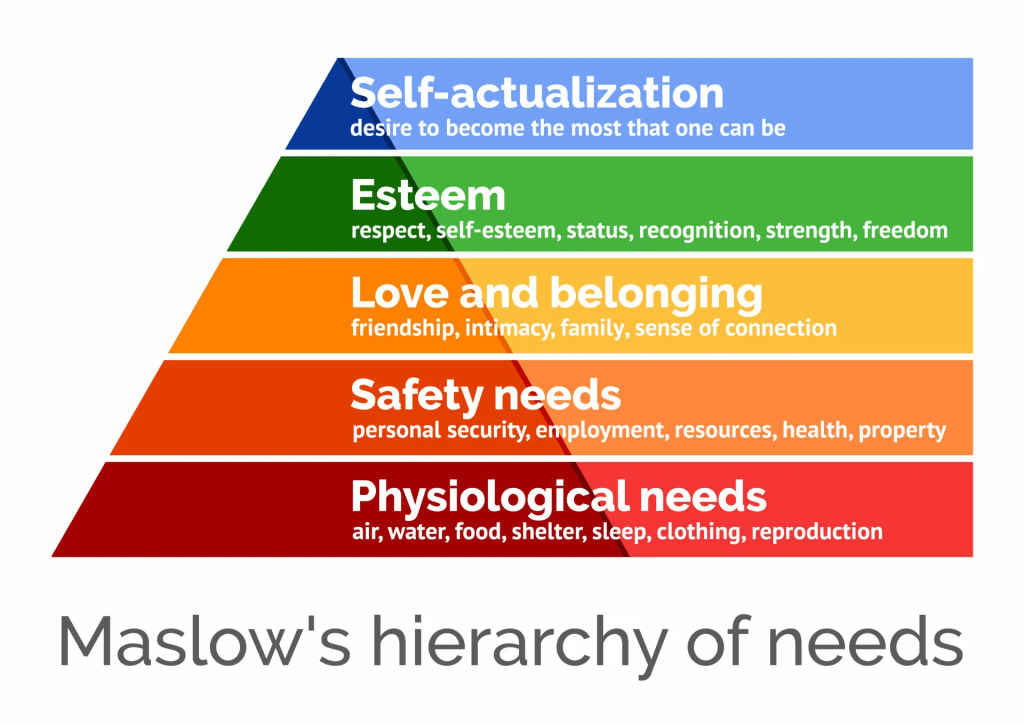
Before I dive into this story, I want to explain Maslow’s Hierarchy of Needs. If you’ve taken a psychology course, you’re probably familiar with it, but here’s a quick overview for those who haven’t. Maslow’s Hierarchy of Needs is a psychological theory that describes human motivation. It’s typically represented as a pyramid (illustrated on your right) with five levels: starting with basic physical needs like food and shelter at the bottom, then safety, social connections, esteem, and finally self-actualization at the top. Generally, people prioritize fulfilling lower-level needs before working towards higher ones.
Understanding this hierarchy is important because it helps explain why people behave the way they do, what drives their actions, and how satisfying these needs influences personal growth and well-being. Okay, now let’s get into it!
A Starting Point
Love, community, and faith in our neighbors strengthened us, but proper economic stability remained out of reach. Living in an environment where essentials like food and safety were uncertain profoundly impacted mental health. Many of us carried anxiety, depression, and a sense of hopelessness.
Research shows that prolonged hardship in childhood complicates mental well-being and hampers our ability to pursue goals beyond mere survival. When basic needs are unmet, nurturing confidence and peace becomes nearly impossible. Recognizing this was the first step in understanding my journey and how I will navigate the system to break it.
Carrying Survival into College
When I first arrived at college, I believed things might change. Yet, college became another battleground for survival. Juggling multiple jobs, classes, bills, and overall responsibilities left little room for dreams. Coming from a background without a financial cushion, I often felt the weight of economic uncertainty.
Yet resilience was my armor. Hustling and sacrificing have shaped my work ethic since I was 15. But among the chaos, I drifted toward partying in college, trying to find momentary relief. I saw my peers doing it, so I just wanted to relate. But deep down, I knew I couldn’t afford a distraction, and I knew that lifestyle wasn’t for me.
By the end of my second year of college, I realized I needed to reframe my focus. It was perfect timing because I got a boyfriend who distracted me from partying and helped me stay focused on my studies. After all, failing was not an option. I refused to return to my small hometown. So, I committed myself fully to studying harder and dreaming bigger. This shift set the foundation for my future growth.
Setbacks and Strengths: A Journey of Growth
My journey has been marked by setbacks that tested my resilience big time. Leaving undergraduate school deeply in debt and with a poor credit score initially crushed my confidence. I questioned whether I could rebuild after such adversity.
But I refused to let setbacks define me. I achieved significant milestones through disciplined saving, paying off my debts, and rebuilding my credit. I learned resilience isn’t about never falling but rising each time we stumble. Every time I faced a challenge, I emerged stronger. And hey, even now, I still face setbacks and challenges, trust me, my life isn’t exactly a walk in the park! I plan to dive deeper into those stories in a future post, but I’ve gotta set the stage first. So, bear with me. I promise I’ll make it worth the journey. Lol.
Reaching a Turning Point in My 30s
In my thirties, I began to see beyond survival. I had a healthy marriage, a stable career, and a new sense of security. Yet, this sense of safety felt strange after years of hustle. Seriously, I started feeling a wave of emotions I wasn’t quite familiar with. After researching, I could sum it up to “survival remorse,” a mix of guilt triggered by the shift from constant hustle to rare moments of peace. I wasn’t sure how to respond to this feeling, but it was tugging painfully at my heart.
So asked myself a few questions:
Why do I feel guilty about enjoying peace and stability after years of hustle?
What does growth look like now that survival is no longer the primary focus?
This curiosity led me to therapy, where I explored intergenerational patterns, “generational curses.” Recognizing these inherited cycles gave me the power to break free and forge a new path.
This shift marked my move toward esteem and self-actualization, the higher levels of Maslow’s hierarchy. I began to thrive, not just survive.
Embracing Self-Actualization and Purpose
Through therapy, I uncovered passions, set meaningful goals, and reconnected with genuine motivation. Progress from merely getting by to thriving became my new reality. I started living intentionally, embracing creativity, purpose, and growth as ongoing pursuits.
This perspective transformed my life. I now live fully, with awareness and purpose. I understand that reaching self-actualization is a continuous journey of learning, contribution, and self-discovery.
Connecting Personal Growth to Broader Social Contexts
Recognizing Maslow’s hierarchy in light of systemic issues like poverty, race, and inequality underscores how individual well-being depends on societal structures. My story and others illustrate that resilience and community support can ignite change, but systemic barriers often trap marginalized groups in survival mode.
My understanding as a Black American has deepened. Centuries of slavery, discrimination, and struggle create what I call “the survival trap,” difficult to escape without awareness and effort. Still, I believe change is possible through deliberate action and mindfulness. Trust me, you can break free.
Reflections and Dreams
This journey has strengthened my desire for my future children: I want them to experience less struggle and more opportunities. I aspire to give them a stable foundation from the start so that they can focus on their passions without the heavy burden of systemic barriers. I hope to create a cycle where basic needs like love, safety, and education are met consistently, allowing future generations to dream bigger and reach higher.
Words of Encouragement
If you’re still caught in survival mode, remember to dream big, craft a clear plan, and stay committed. But please remember, anything you do in life must have a plan. Benjamin Franklin said it best: “If you fail to plan, you are planning to fail.”
The path may be challenging, but you are a warrior. I know you are because you made it through this blog. Lol. Trust in your resilience and perseverance. Every small step forward is progress. Your journey is shaped by hope and action, not just circumstances.
Keep pushing; don’t shy away from setbacks, they’re part of growth. Celebrate each milestone, no matter how small. Believe in your potential, develop your plan, and above all, trust the process.
Final Thoughts
Our backgrounds influence our approach to life, but they do not determine our destiny. Understanding Maslow’s hierarchy reveals where we are and points us toward growth, whether meeting basic needs or striving for self-actualization. Despite living much of my life in survival mode, my dreams and resilience have kept me going.
Sharing our stories authentically can inspire others and build community. We can create a future where no one remains stuck in survival for too long, and everyone has the opportunity to live with purpose, flourish, and reach their fullest potential. I know, wishful thinking.
But growth begins with awareness, hope, and daring to dream bigger, your journey is unique, but you are not alone. We can all rise together.




Leave a Reply